GTD Tells You What Is Next. It Never Promised to Tell You What Is Late
getting things done method5 min read
Explore the limitations of the Getting Things Done method and how otoodo can help you know when deadlines are impossible.
The Getting Things Done (GTD) method is widely praised for its ability to help individuals capture tasks and determine the next actions required to complete them. However, it falls short in one critical area: it does not account for capacity. A trusted system can still hold 60 hours of next actions for a 30-hour week. This leads to a significant gap in planning effectiveness, especially when deadlines loom.
In this post, we will explore the limitations of the GTD method, the importance of capacity awareness in task planning, and how otoodo can bridge this gap by providing a clear view of what today must contain to meet deadlines.
The Short Version
- GTD excels at capturing tasks and determining next actions but does not address whether you have the capacity to complete them.
- A common issue with GTD is that it can lead to an overwhelming number of tasks that exceed your available hours.
- Capacity-aware planning can help you identify when deadlines are impossible and how to spread work effectively.
- otoodo offers a solution that calculates your available hours and tells you exactly what you need to do today to stay on track.
Understanding the Getting Things Done Method
The GTD method, developed by David Allen, is a productivity framework designed to help individuals manage their tasks and projects efficiently. The core principles of GTD include:
- Capture: Write down everything that needs to be done.
- Clarify: Determine the next actions required for each task.
The Capacity Gap in GTD
One of the significant challenges with the GTD method is its reliance on subjective estimates of how long tasks will take. Without a clear understanding of your available hours, you might end up with an overflowing to-do list that does not reflect reality. Here are some common issues that arise from this capacity gap:
- Overcommitment: You may take on too many tasks, believing you can complete them without realising you lack the time.
- Last-Minute Rush: When deadlines approach, you might find yourself scrambling to complete tasks, leading to stress and subpar work.
- Inaccurate Planning: Without a capacity-aware system, your planning might not accurately reflect the time required to meet deadlines.
The Importance of Capacity Awareness
To address the limitations of the GTD method, it is essential to incorporate capacity awareness into your planning. This involves understanding how many focused hours you have available each week and how those hours can be allocated to tasks. By doing so, you can:
- Set Realistic Goals: Knowing your limits allows you to set achievable deadlines and avoid overcommitting.
- Prioritise Effectively: You can determine which tasks are most critical and allocate your time accordingly.
- Plan for Contingencies: Understanding your capacity helps you build in buffer time for unexpected tasks or delays.
Example of Capacity Planning
Let’s consider a practical example. Suppose you have the following tasks for the week:
How otoodo Bridges the Capacity Gap
otoodo is a deadline-aware task planner that does the arithmetic for you. It calculates your available hours and tells you exactly what today must contain to meet your deadlines. Here’s how otoodo can help you manage your workload effectively:
- Capacity Calculation: otoodo considers your working hours per weekday and subtracts recurring commitments before planning your tasks.
- Proportional Work Distribution: It spreads work proportionally, ensuring that a task with a longer deadline is broken down into manageable daily portions.
- Feasibility Reporting: If a task cannot be completed on time, otoodo will inform you of the exact shortfall in hours, allowing you to adjust your plans proactively.
Visualising Your Workload
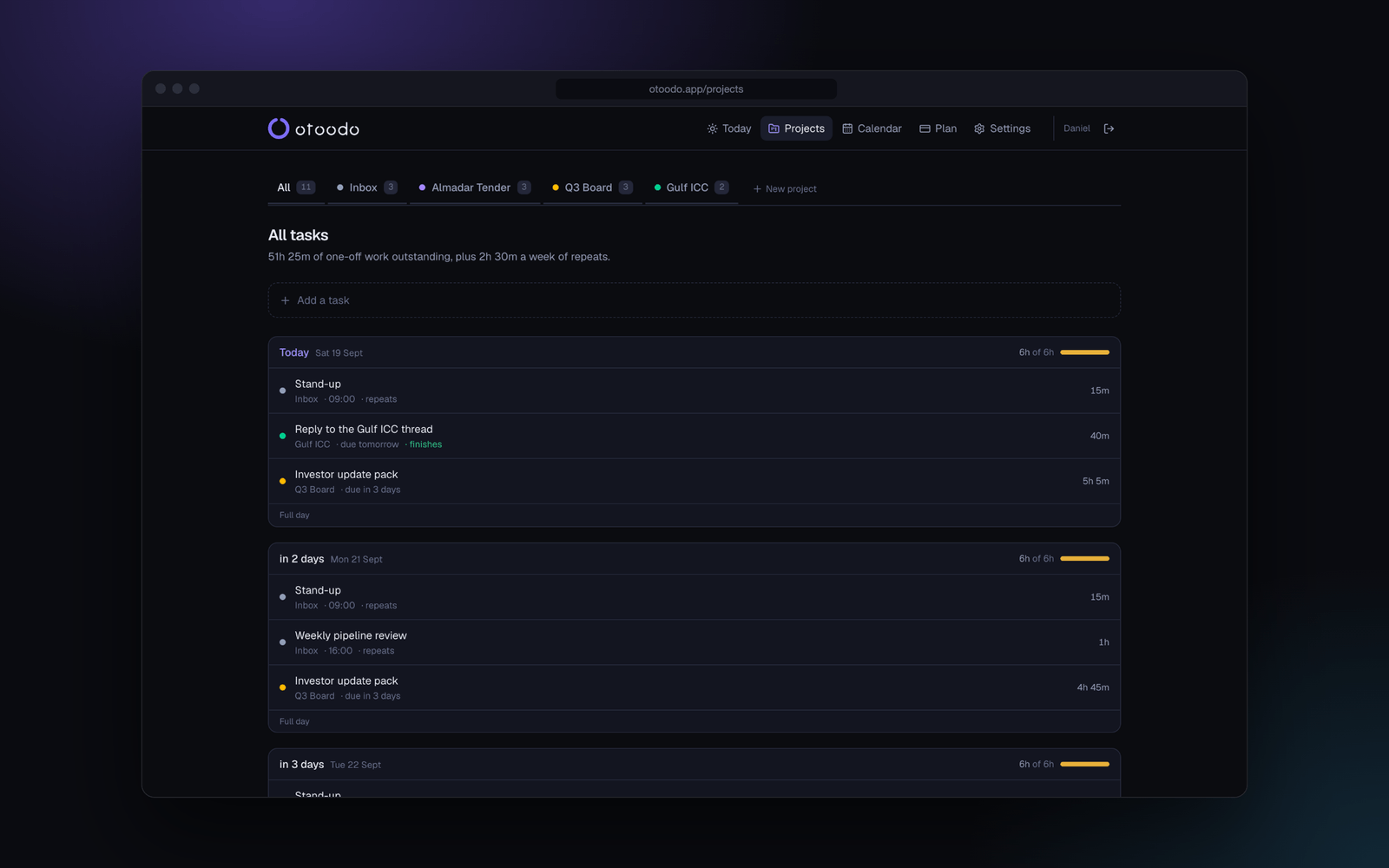
To illustrate how otoodo can help you manage your capacity, consider the following image of the Today screen:
This screen provides a clear view of your planned tasks for the day, along with any shortfalls that need to be addressed. You can see how many hours you have available and how much work is planned, ensuring you stay on track.
A Comparison of GTD and otoodo
To further understand the differences between the GTD method and otoodo, let’s compare their approaches:
Addressing Common Concerns with Capacity Planning
While capacity-aware planning has its advantages, it's essential to acknowledge some potential drawbacks:
- Estimation Errors: Task estimates can be inaccurate, leading to unexpected shortfalls. However, rough estimates are often sufficient for the arithmetic to be useful.
- Inflexibility: Some tasks may not be easily spread over time. In such cases, you may need to reassess your commitments and priorities.
- Team Dynamics: If you're working with a team, ensuring everyone is aligned on capacity can be challenging. otoodo handles this by allowing you to delegate tasks without requiring team members to log in.
Conclusion
The GTD method is an effective way to capture tasks and determine next actions, but it does not address the critical issue of capacity awareness. By incorporating a system like otoodo, you can gain a clearer understanding of your available hours and what you need to do each day to meet your deadlines. This approach not only reduces stress but also enhances your ability to deliver quality work on time.
If you’re ready to take control of your workload and ensure you meet your deadlines, consider trying otoodo. You can start with a free plan that includes the entire planner for one person and three projects. Fourteen days free, no card: otoodo.app/signup.